Back to Blog
  182
182
Before reaching for a glass, a human naturally anticipates various possibilities without conscious effort. We intuitively judge whether our grip might slip, whether the glass is empty, or whether liquid might spill if it is full. We unconsciously predict what would happen even if the table shakes. In short, humans estimate the consequences of an action before physically initiating movement.
To date, physical robots have not operated in this manner. While modern systems perceive scenes through cameras and actuate arm trajectories according to learned policies, they rarely simulate or evaluate the outcomes of those actions beforehand. Robotics has successfully linked seeing with acting, yet the crucial intermediate phase, predicting the consequences of action, remains largely unfulfilled.

This gap exposes a fundamental distinction in the nature of intelligence rather than a simple missing feature. Human physical behavior is stable and adaptive not merely because we react rapidly to feedback, but because we act while taking potential outcomes into account from the outset. Conversely, because physical robots rely on policies trained through trial and error, they remain fragile when encountering unexpected environmental shifts. This architecture essentially mirrors action without foresight. Ultimately, the central question facing robotics emerges: When will physical robots transition into systems that think before they act?
Structural Limitations of Legacy Robotics
Over the past few years, robotics has advanced at a rapid pace. Architectures like RT 1 and RT 2, alongside Vision Language Action (VLA) models that unify vision, language, and motion, successfully mapped visual and linguistic inputs directly to physical execution. Through these models, physical robots demonstrated the potential to perform increasingly diverse tasks, evolving beyond repetitive industrial machinery toward generalized action generation systems.
Despite these advancements, structural limitations remained prominent. Most modern robotic control stacks operated on a reactive paradigm: Current State to Immediate Action. Given a specific observation input, the system generated a corresponding motor output, lacking deep consideration of how action consequences would unfold over time.
This limitation became particularly glaring in long horizon tasks. Even seemingly simple operations like pouring water actually consist of a complex sequence of continuous physical interactions evolving over time. Yet because physical robots tended to optimize only for instantaneous actions, minor step errors accumulated sequentially, ultimately leading to total task failure. This frequently triggered the compounding error problem.
Furthermore, fundamental bottlenecks constrained the learning process itself. Systems still required training on massive real-world physical datasets, a data collection process that was prohibitively expensive, risky, and slow. To mitigate this, simulation based training was widely adopted, yet models trained in synthetic environments struggled when transferred to physical hardware, giving rise to the persistent Sim to Real Gap.
The core of this problem is straightforward: physical robots were not truly understanding the world, but merely memorizing action patterns that worked well within specific training distributions. Because real-world physical environments constantly deviate from these distributions, Out of Distribution failures remained inevitable.
Ultimately, despite acquiring robust action generation capabilities, legacy robotics lacked a critical ability: predicting what happens next if a specific action is taken.
At this junction, a new approach became necessary, one that fundamentally transforms how physical robots perceive the world.
What is a World Model? A Simulator Inside the Mind
The core concept emerging to address these challenges is the World Model.
A World Model is neither a simple perception model nor a pure action generator. Instead, given the current state and a candidate action, it predicts how the future state will evolve. In other words, it operates much like constructing an internal virtual world inside the robot to simulate diverse scenarios beforehand.
The essence of this model lies in prediction: calculating in advance which direction an object will slide when pushed, how water will flow when a glass tilts, or whether a door will swing open or hit a frame when pulled. This prediction must go beyond mere visual imagination, functioning as a simulation grounded in physical causality.
Crucially, a World Model differs fundamentally from a simple video generation model. A World Model must perform prediction explicitly conditioned on action. Rather than merely rendering future visual frames, its core architecture computes how the physical world reacts to a specific action.
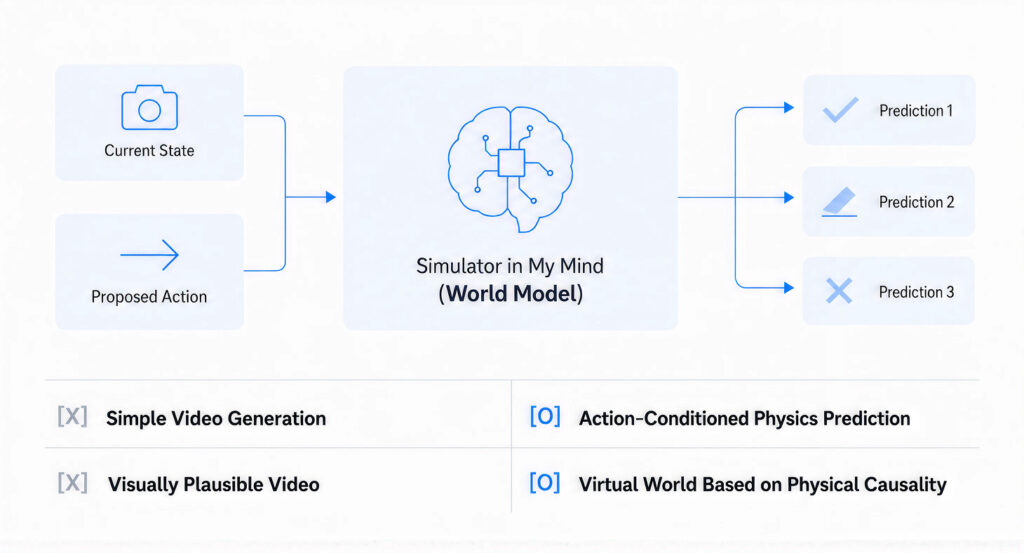
This mental process aligns closely with human cognition. Before executing physical movement, humans mentally simulate various outcomes and select an action based on those results. The World Model represents an ambitious endeavor to embed this internal simulation capability within machines.
If perception served as the eyes perceiving the world and policy functioned as the motor muscles in classical robotics, the World Model acts as the predictive faculty or internal imagination operating between them. Only when these three components combine can physical robots transcend purely reactive systems and evolve into autonomous entities capable of deliberate reasoning.
Consequently, the central inquiry in robotics no longer rests on what a robot can execute. Instead, it expands toward a more fundamental question: How deeply can a physical robot pre-live and evaluate its future through prediction?
Why World Models Are Resurfacing Now
The concept of a World Model is not inherently new. Robotics and reinforcement learning researchers have long attempted to model environmental dynamics and plan actions based on those representations. Nevertheless, there are clear reasons why this architecture is resurfacing with unprecedented force today.
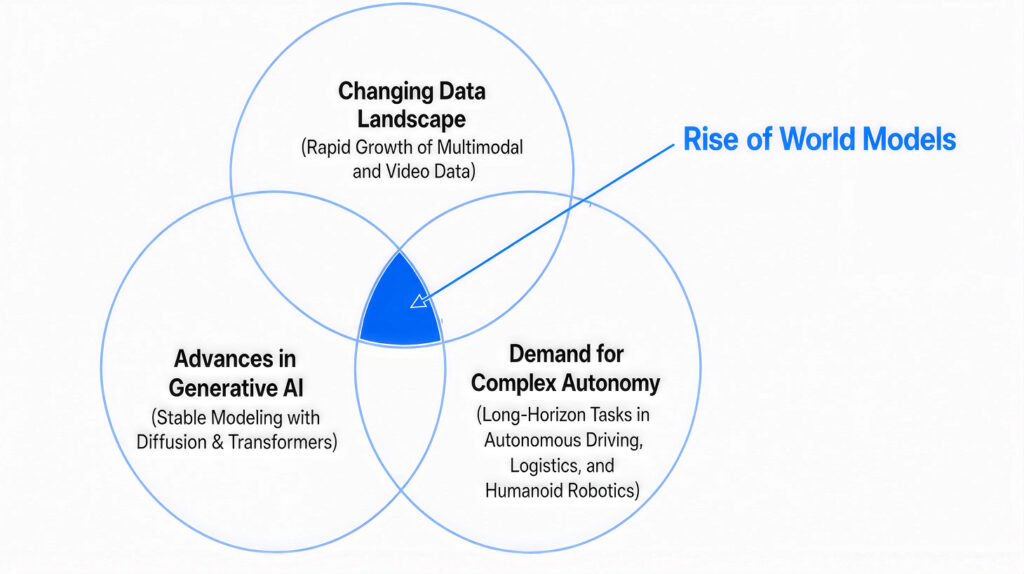
The first catalyst is the transformation of the data ecosystem.
While legacy robot learning relied on severely constrained real-world physical datasets, recent years have witnessed an explosive accumulation of large-scale video and multimodal data. Beyond static image recognition, these datasets provide a foundation to learn temporal state changes and continuous physical interaction dynamics. In essence, the prerequisite conditions to train models on how the physical world evolves have finally materialized.
The second driver is architectural advancement.
Diffusion models and Transformer-based generative architectures have demonstrated exceptional capability in modeling highly complex distributions. These expressive models are increasingly applied to time-series data and dynamic physical dynamics rather than static outputs. Consequently, realistic future state prediction, once technically intractable, has transitioned into an attainable capability.
The third and most crucial factor is the evolution of the target problem itself.
Robotics no longer targets the automation of simple repetitive tasks. Modern deployments, including autonomous driving, logistics systems, and physical humanoids, demand a deep comprehension of unstructured environments, long-horizon outcome evaluation, and provably safe execution. These requirements represent a domain that purely reactive policies cannot resolve.
Ultimately, World Models have resurfaced not as a mere novelty, but as a natural imperative to address the modern demands of physical AI. As technical feasibility intersects with pressing application requirements, World Models are firmly establishing themselves as a practical paradigm.
How Are World Models Being Implemented?
World Models have not converged into a single unified architecture. Instead, this technical domain features competing and coexisting paradigms. While sharing the common goal of predicting the future, distinct methodology streams are actively developing, formed around specific research groups and leading tech entities.
The most intuitive framework is the Video World Model. This paradigm generates future visual scenes directly from past observations and candidate actions. Recent research focuses on accurately capturing fine-grained physical interactions during robotic manipulation. Notably, IRASim, presented at ICCV 2025, demonstrated frame-level action-conditioned fusion to precisely model interactions between robot end-effectors and target objects. Competitors in this domain include ByteDance, university labs, and autonomous system startups. NVIDIA is similarly positioning video prediction based world modeling as a central pillar of its Cosmos platform. While highly intuitive and interpretable, this approach currently leans heavily toward visual consistency over strict physical dynamics correctness.
The second stream is the Diffusion World Model. This approach leverages the stable distribution modeling capabilities of diffusion mechanisms to treat the physical environment itself as a generative model. Following the breakthrough of diffusion policies in robotic control around 2023, research expanding diffusion into environment modeling gained significant momentum by 2025. World4RL (2025) proposed utilizing a diffusion based world model as a fixed environment to optimize robot policies entirely off-hardware. Similarly, the Unified World Model (2025), proposed jointly by the University of Washington and the Toyota Research Institute, introduced unified training over video and action data using a diffusion structure, handling policies, forward dynamics, and inverse dynamics simultaneously within a single architecture. This stream holds immense industrial value by eliminating physical hardware reliance during policy refinement, significantly driving down training costs.
The third paradigm centers on Unified or Joint Models, which merge prediction and action generation. Rather than maintaining a split architecture (Prediction Model feeding a Policy Model), these systems perform future state prediction and control synthesis concurrently inside a single network. This aligns closely with the trajectory of modern robotics foundation models. For instance, Physical Intelligence’s π₀ (2024) paired vision-language-action capabilities with flow matching based continuous control, reframing the policy itself as a generative process. Subsequent research is rapidly integrating world modeling capabilities into this framework. Similarly, NVIDIA’s GR00T family and various foundation model initiatives are shifting toward handling prediction and control within a single shared representation. This domain represents a dynamic experimental phase addressing how post-VLA architectures will be structured.
Finally, the Latent World Model (JEPA family) represents an increasingly critical trajectory. Strongly championed by Yann LeCun, this framework bypasses pixel-level reconstruction to predict compressed latent representations containing only the essential information needed for planning and action. Models within the Joint Embedding Predictive Architecture (JEPA) lineage focus strictly on what changes, filtering out task-irrelevant visual noise to force the model toward key structural dynamics. This paradigm is widely regarded as vital for real-time operation, computational efficiency, and physical hardware deployment.
Ultimately, current World Model research unfolds across four primary axes: Video-based prediction, Diffusion-based environment generation, Policy integration, and Latent-space representation.
Rather than mutually exclusive competitors, these four directions likely represent complementary approaches addressing distinct engineering trade-offs. Video models offer intuitive visualization, latent models yield computational efficiency, and diffusion models provide stable distribution generation.
The eventual standard for World Models will unlikely reduce to a single winner. Instead, it will reorganize around a core benchmark: Which representation best compresses the physical world while maintaining seamless coupling to action execution? This question sits at the center of modern robotics innovation.

The Evolving Role of World Models in Robotics
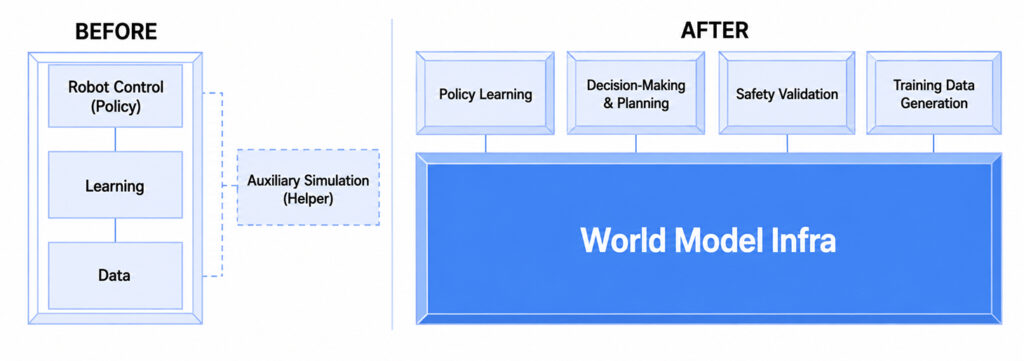
A World Model can no longer be understood as merely a secondary module bolted onto existing stacks. While initially introduced as an auxiliary component for motion planning or simulation, it is rapidly transitioning into foundational infrastructure that reshapes robot learning and execution end-to-end.
First and foremost, a World Model enhances planning and decision making. Before physically executing movement, a system can evaluate candidate action trajectories within its internal model, predict respective outcomes, and select the optimal trajectory. This shift represents a transition from purely reactive execution to deliberate evaluation and choice.
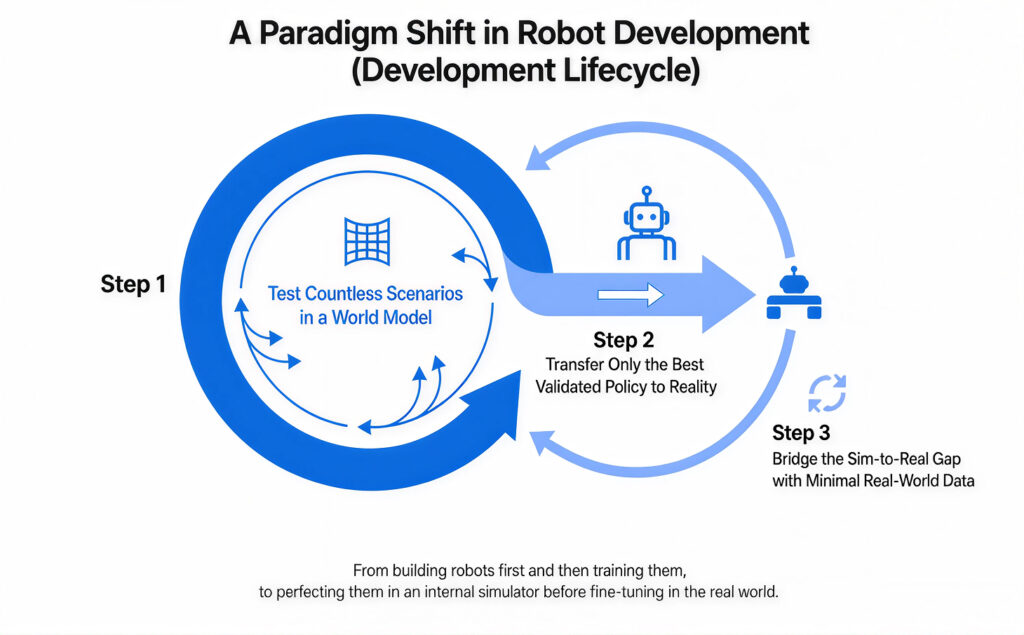
Second, World Models serve as synthetic training environments. Rather than deploying hardware through repeated real-world trial and error, algorithms can generate diverse scenarios and optimize policies entirely inside the model. This significantly alleviates real-world physical data bottlenecks, cutting both collection costs and timeline overheads.
Third, World Models fulfill a critical verification and safety monitoring role. By leveraging predictive rollouts to filter out hazardous trajectories or high-probability failures in advance, the system dramatically improves operational safety on physical hardware. This capability is paramount in safety-critical domains such as industrial manufacturing and physical humanoids.
Furthermore, World Models are expanding into active data generation engines. By synthesizing rare edge cases, extreme physical conditions, and out-of-distribution events inside the neural simulator, developers can train policies capable of handling unpredictable real-world anomalies.
These transformations illustrate that World Models are transcending functional components to become the backbone supporting modern embodied systems. Classical robotics relied on a sequential perception-to-control pipeline. The emerging framework reorganizes around a architecture where all operational modules connect centered around prediction.
Ultimately, a World Model is not merely a tool that modifies how robots act: it fundamentally transforms how robots comprehend the physical world.
The Business Value of World Models
The significance of World Models extends far beyond academic research labs. This technology commands widespread attention not merely because it renders robots smarter, but because it fundamentally transforms the unit economics and industrial framework of robotics development.
To date, one of the primary bottlenecks facing the robotics industry has been the sheer cost of real-world physical data acquisition. For a physical robot to learn a novel task, developers had to rely on manual human teleoperation or hardware execution runs. This process was inherently time consuming while incurring physical hardware wear, safety risks, and substantial labor costs. In training paradigms requiring vast failure datasets, these burdens escalated severely. While traditional physics simulators were long viewed as a viable alternative, they suffered from the Sim to Real Gap, failing to reflect the intricate physical dynamics and unpredictable nuances of reality. At this critical juncture, World Models emerge not as a static visual simulator, but as generative learning infrastructure capable of flexibly synthesizing physical interactions that remain difficult to harvest in the wild.
From an industrial perspective, this shift marks a fundamental redesign of physical engineering workflows rather than incremental performance optimization. Classical robotics relied on building hardware first, harvesting physical data second, and training policies last. Moving forward, the dominant workflow will involve testing millions of scenarios inside neural predictive models before rapidly fine-tuning physical systems on real hardware. In domains where real-world validation is prohibitively expensive, such as logistics, manufacturing, autonomous driving, and physical humanoids, this shift yields profound cost reductions. NVIDIA’s push via its Cosmos platform, emphasizing synthetic data, prediction, and neural simulation pipelines for physical AI, illustrates this broader industrial trajectory where World Models serve as the foundation for policy training and safety evaluation.
Furthermore, World Models will likely transcend serving purely as training infrastructure. At the deployment stage, they can function as an active safety layer, screening for dangerous trajectory candidates prior to execution and generating rare yet critical edge cases to ensure operational safety. In other words, a World Model is simultaneously a technology that optimizes physical execution, lowers iteration costs, and enhances operational safety. Consequently, World Models are rapidly emerging beyond a simple capability benchmark into a decisive economic lever altering the ROI and cost structure of the robotics business.
Practical Limitations of World Models
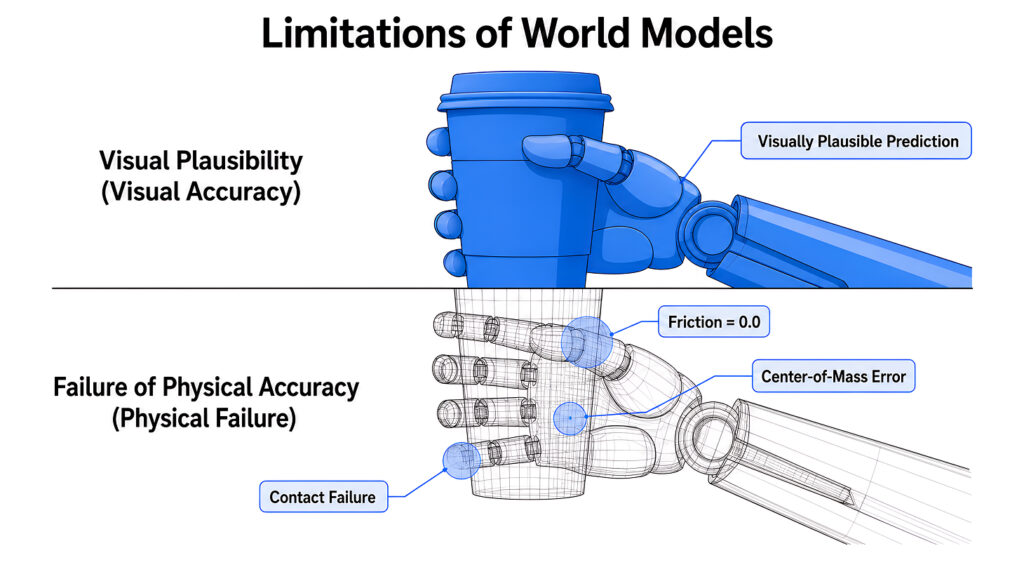
Caution is warranted against viewing World Models as an infallible panacea for next generation robotics. As the term World Model gains widespread popularity, its precise definition risks becoming diluted. Numerous researchers highlight that many current architectures labeled as World Models resemble standard video prediction systems rather than true representations of physical reality. While these networks render visually convincing future frames, they frequently fail to capture essential physical signals crucial for physical robots, such as contact dynamics, force vectors, friction coefficients, weight shifts, and tactile feedback.
This limitation manifests acutely in robotic manipulation tasks. Visual predictions that appear natural on a two dimensional screen may prove physically impossible in the real world. Generating a visually convincing video frame of a robot grasping a glass does not guarantee accurate predictions of grasp stability, friction slip, or fine force regulation. Consequently, recent manipulation focused World Model research is shifting away from pure video rendering toward frame level action alignment, precise physical interaction modeling, and explicit 3D and 4D spatial grounding. Nevertheless, these advancements remain in early exploratory stages, and a standardized, industry ready solution capable of operating reliably in deployment settings has yet to be established.
Another formidable bottleneck lies in benchmarking and evaluation. Unlike large language models, which benefit from standardized text based metrics and established benchmarks, World Models for robotics lack uniform evaluation protocols. Whether a predicted future state appears visually plausible is fundamentally distinct from whether it remains physically valid. As a result, evaluating which World Model genuinely excels, measuring its correlation with downstream hardware performance, and quantifying its safety contributions remain challenging without common benchmarks. This gap underscores ongoing calls within the robotics community for unified evaluation frameworks.
Ultimately, while World Models represent a highly promising paradigm, a tangible gap persists between current capabilities and real-world deployment needs. What the field requires now is deliberate rigor rather than uncritical optimism, separating proven engineering breakthroughs from unresolved bottlenecks. Only through this clear eyed perspective can World Models transcend hype and mature into true foundational infrastructure for embodied intelligence.
The Next Steps for World Models
Where are World Models heading in the future of robotics? Current trajectories indicate that rather than remaining isolated modules, World Models will integrate more deeply with other foundational components of the robotic control stack.
The first trajectory is integration with Vision Language Action (VLA) models. Thus far, VLAs have excelled at comprehending task intent and mapping instructions to physical actions, yet they faced limitations in long horizon reasoning and physical outcome evaluation. Conversely, World Models specialize in predicting future states. Moving forward, semantic understanding, action generation, and outcome prediction will unify inside tightly coupled architectures rather than operating as disparate systems. Recent research demonstrates this by co-training video diffusion and action diffusion, or handling policies and environment dynamics concurrently inside a single backbone.
The second direction is multisensory expansion. While many contemporary World Models prioritize vision, interacting with the physical world demands rich sensory signals including tactile feedback, force torque measurements, and contact timing. In delicate manipulation and long horizon operations, these non-visual cues often prove more decisive than pixel data alone. This aligns with recent shifts in industrial robotics and dexterous manipulation toward integrating tactile force telemetry. Long term, predictive architectures will evolve from merely seeing the future to physically feeling it.
The third trajectory centers on 3D and 4D structural representation. Future World Models will advance beyond merely rendering convincing subsequent 2D video frames, focusing instead on internalizing explicit spatial structures over time. Transitioning away from superficial 2D pixel realism, models will represent object coordinates, depth metrics, kinematics, and contact interactions within temporally consistent spatial representations. This spatial grounding is crucial for long horizon planning, multi view trajectory prediction, and humanoid manipulation.
Finally, World Models will likely co-evolve alongside policies. Under this framework, the World Model learns refined dynamics from policy execution failures, while the policy leverages the updated World Model to conduct higher level planning and exploration. Here, the World Model evolves beyond a static simulator into an active internal environment that continuously amplifies intelligence. This underpins the growing focus on world model policy co-evolution and predictive evaluation pipelines.
In summary, the evolution of World Models will not prioritize merely building larger or more visually compelling generative models. Instead, it will focus on constructing a robust predictive infrastructure that unifies semantic understanding, physical dynamics modeling, multisensory integration, and safe action evaluation. This shift will advance physical robots from systems that merely execute motion to autonomous entities that evaluate consequences and deliberate before acting.
The Future of Robotics Transformed by World Models
The evolution of modern robotics can be framed across three distinct epochs.
The first epoch was defined by automation machinery, where robots executed pre-programmed, repetitive tasks. While highly effective within fixed industrial boundaries, their capacity to adapt to novel situations remained severely constrained.
The second epoch emerged with the rise of Vision Language Action (VLA) models. Physical robots acquired the ability to comprehend vision and natural language, translating multimodal reasoning into flexible motor execution. Systems progressed beyond executing simple commands toward interpreting context and selecting contextual actions.
Now, robotics is transitioning into its third epoch: an era where physical robots evolve from systems that merely act into systems that simulate future consequences and choose actions based on those predictions.
This shift is paramount because in the physical domain, a single failure carries far heavier consequences than an error in text generation. If a language model hallucinates, it simply regenerates text. Conversely, an erroneous physical action can damage property, endanger human safety, or undermine user trust in autonomous hardware. Consequently, the core bottleneck of Physical AI lies not in dynamic generation capacity, but in predicting outcomes, mitigating physical risks, and adjusting control policies within long horizon contexts.
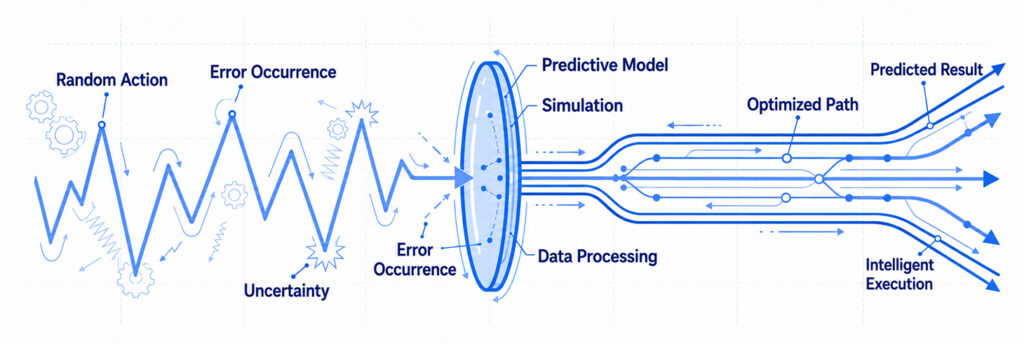
This requirement defines the critical importance of World Models. Substantial engineering hurdles undeniably remain: disparate methodologies currently compete under the umbrella of World Models, and verifying precise grounding in physical reality demands ongoing validation. Yet one reality is clear: robotics cannot reach its next frontier relying solely on reactive intelligence. To operate safely across complex environments over extended time horizons, physical hardware must embed an internal framework that predicts how the world evolves. Ultimately, the World Model paradigm is not a transient industry trend, but an essential inflection point required for physical intelligence to mature.
The ongoing shifts in this field represent far more than a race to generate higher fidelity video. They mark a fundamental redefinition of how physical robots comprehend the physical world and how they act upon that understanding.
The central inquiry is no longer restricted to what a physical robot can perform. A far more fundamental question remains:
How accurately can a robot evaluate the physical world before it acts?
World Models stand as the most definitive answer to that question.