Back to Blog
  426
426

In our last post, we introduced Odin AI, our Generative AI-based video surveillance solution. Since then, we’ve received more questions than expected, mostly centered around one thing: “How is this actually different from existing intelligent CCTV?”
To be honest, I had similar questions at first. Terms like “next-level” or “AI-integrated” sound impressive, but it’s hard to grasp what those actually look like in the field. So today, instead of abstract technical jargon, I want to talk about the real, tangible changes you can feel on-site. Here are five ways Generative AI surveillance is transforming the industry.
Ⅰ. From Blind Alarms to Precision Alerts: Catching Only the Real Emergencies
CCTVs are everywhere. We trust them to watch over us 24/7, but the cold truth is that most traditional CCTVs simply record footage without “understanding” what’s happening. Even if someone collapses or a dangerous situation unfolds, they just keep recording in silence.
Existing “intelligent” CCTVs with object recognition were a step up, but they had clear limits. Traditional Deep Learning (CNN) models could detect that a “person is lying on the floor,” but they couldn’t understand why. They couldn’t distinguish between a worker taking a break, someone cleaning the floor, or a genuine medical emergency. The result? Frequent false alarms that led to “alarm fatigue,” causing operators to sometimes miss the alerts that actually mattered.
Generative AI surveillance, however, understands the context and flow of a scene. It interprets a situation based on meaning rather than just shapes.
- Emergency: A person collapses while clutching their chest → Immediate Alarm
- Normal Activity: A person lies down to rest while using their phone → No Alarm
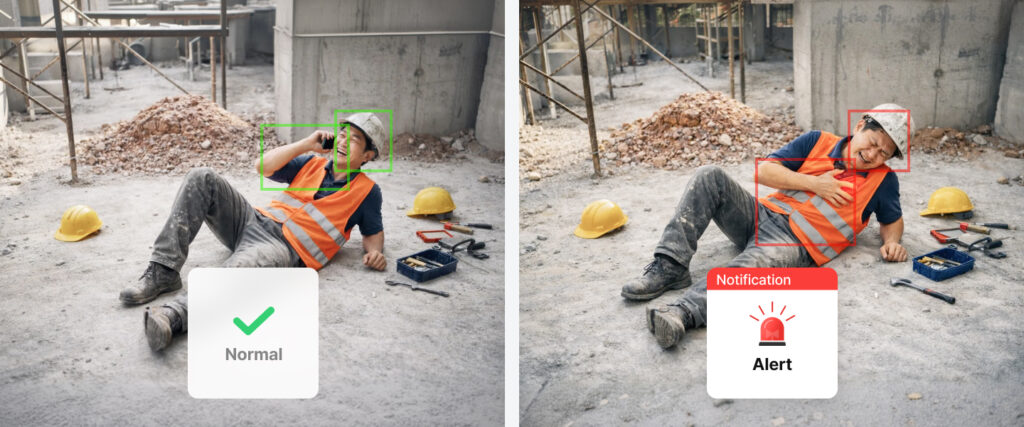
This contextual awareness drastically reduces false positives. By analyzing the “before and after” of an action, the system filters out noise and highlights only significant anomalies. This allows operators to stay focused on critical tasks without being distracted by relentless, meaningless pings.
Ⅱ. Video Search: From Hours to Seconds
Anyone who has worked with CCTV footage knows the pain of scrubbing through hundreds of hours of video just to find one specific clip. It used to be a test of extreme patience. Because old search methods relied on simple keyword filters like “Person” or “Red,” managers still had to manually review thousands of filtered results.
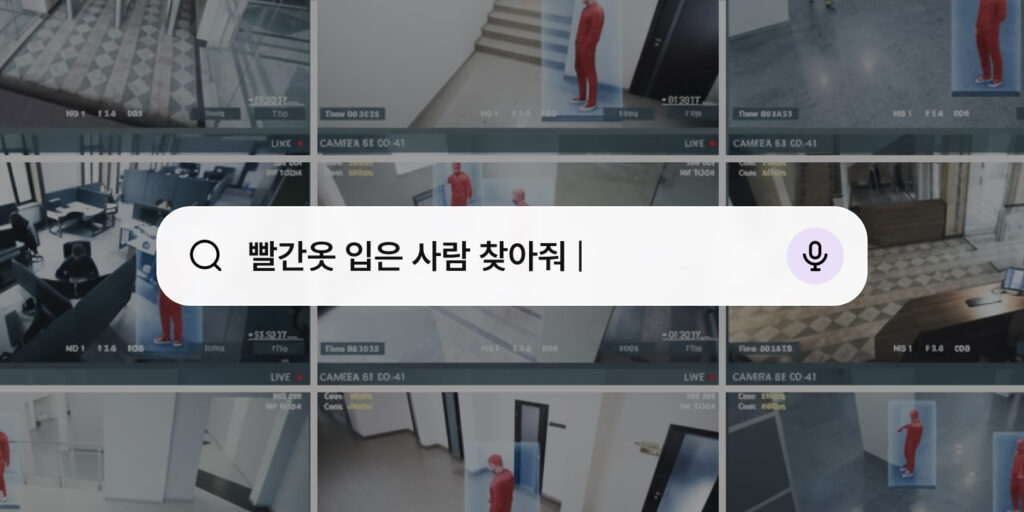
With Multi-modal Generative AI, that struggle is over. Now, you can simply type a natural sentence like “Find the person wearing a red shirt,” and the AI understands the context to locate that exact moment within massive datasets—often in just a few seconds.
We saw this clearly with a recent client. They needed to extract key scenes from several terabytes of footage collected over a month of vehicle travel. What would have taken days of overnight work in the past was completed in just a few hours. In time-sensitive situations like criminal investigations or missing person searches, this speed doesn’t just save time—it saves lives.
Ⅲ. No More Constant Re-training: Flexibility in a Changing Environment
In surveillance, you often run into “ghost” issues. A person is clearly on screen, but the system says “No target detected.” Often, it’s because a uniform color changed or equipment was moved slightly. The system wasn’t “broken”; the old intelligent algorithms simply couldn’t keep up with the change.
In traditional CNN-based systems, even minor changes required collecting new data, labeling it, and re-training the model. During that gap, operators had to endure errors or revert to manual monitoring.
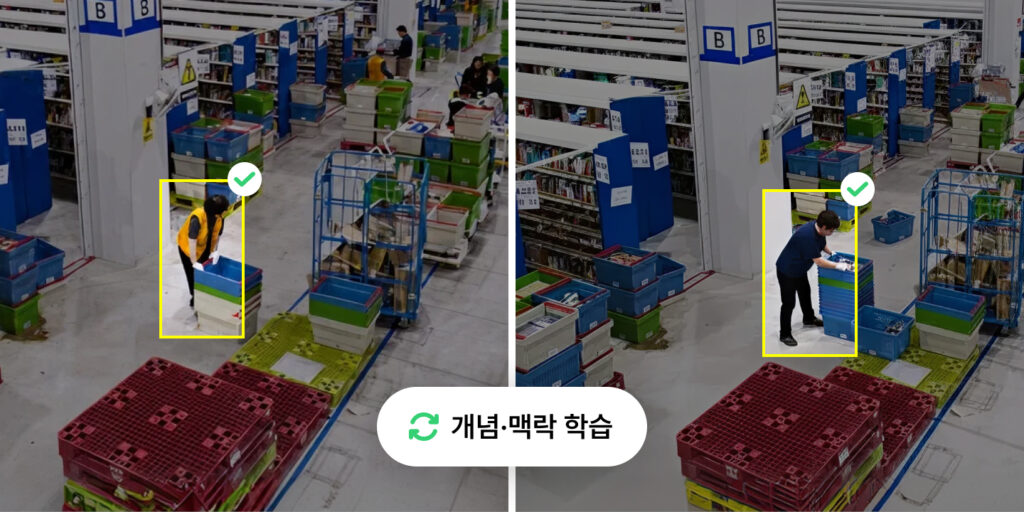
Generative AI-based surveillance solves this fundamentally. Because these models have already learned general concepts and contexts of the world through massive datasets, they aren’t easily confused by a new uniform or a different layout. They adapt to environmental changes with little to no additional training, making operations much smoother and more resilient.
Ⅳ. Proactive Prevention: Predicting Risks Before They Happen
On-site, there are often “close calls”—moments where a pedestrian is nearly hit by a car or a worker briefly ignores a safety protocol. Traditional systems usually let these moments slide because no actual “accident” occurred.
Generative AI surveillance transforms these moments into valuable data. It automatically detects and records “Near-miss” incidents. Operators no longer have to manually rewind tapes; the AI flags high-risk scenes for review.
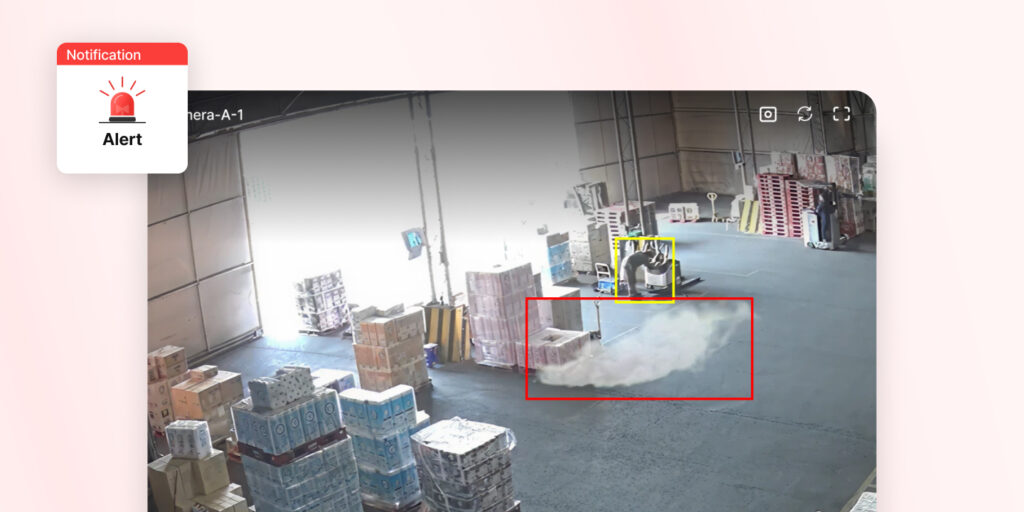
By analyzing patterns in these near-misses, we can turn simple video recordings into proactive safety data. This allows for real-world preemptive measures, such as improving signal timing at dangerous intersections or reinforcing specific safety rules. We are moving from “reactive” monitoring (responding after an accident) to an era of “data-driven preventive surveillance.”
Ⅴ. Control via Chat: Your Intent is the Command
In the past, if you wanted to change what a CCTV was looking for, you had to call a security expert and wait days for a configuration update. Now, the user can change detection modes instantly through a simple interface.
If you type, “Detect people not wearing safety helmets,” the AI starts looking for them immediately. If you change it to “Detect anyone climbing over the fence,” it switches gears instantly. It functions like a colleague who understands your language perfectly. This shifts the operator’s focus from “managing software” to “judging and responding to situations.”
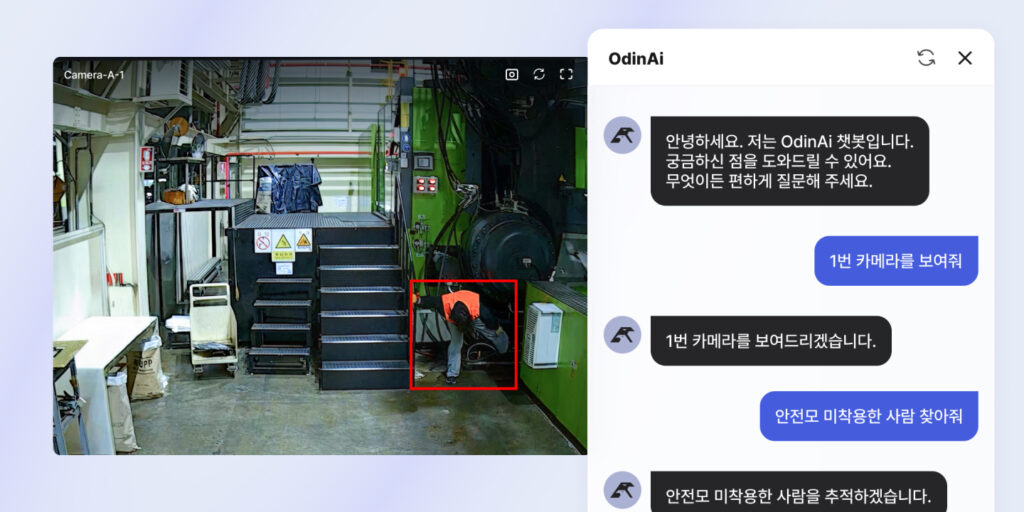
With Generative AI, the user’s intent becomes the system’s command. This empowers the people who know the site best—the operators—to take control without waiting for technical support.
Closing Thoughts
Ultimately, the shift to Generative AI surveillance isn’t just about “smarter tech.” It’s about shifting the center of gravity from system configuration back to human judgment.
What counts as a risk and how to respond is now defined by the language and intent of the people on the ground. Generative AI is simply the most reliable partner to help interpret those intentions. At Laon People, our Odin AI continues to evolve in this very direction—realigning the roles of people and technology to ensure we intervene exactly when it matters most.
To learn more about Generative AI surveillance, check out the video below. (Click↓)”