Back to Blog
 In 2024, we experienced the potential and excellence of Generative AI, asking everyday questions to ChatGPT and creating imaginative images with Midjourney. While individuals were impressed and enthusiastic about its performance, companies had to face questions like, “So what do we do with this? Can we actually make money?”
The potential of AI was clear, but the connection to business outcomes was not easily drawn.
In 2025, the answers to those questions have begun to emerge. AI is moving past the stage of ‘experimentation and demonstration’ and is deeply penetrating core business operations. It is evolving beyond a general-purpose auxiliary tool into autonomous systems specialized for each industry and task.
In this report, we will outline the core changes driving the AI market in 2025 and highlight the points we should be focusing on. We will also discuss how LaonPeople’s products and solutions align with these trends.
1. The Era of the ‘Autonomous AI Agent’ (Actionable AI)
In 2025, AI evolved from a conversational tool to an autonomous agent. Going beyond merely answering human questions, ‘Actionable AI’ has emerged—AI that plans and executes tasks independently. Take restaurant reservations as an example: the AI analyzes the user’s preferences and schedule, recommends a restaurant, and even completes the reservation by phone. It’s not waiting for human commands; it’s actively solving problems.
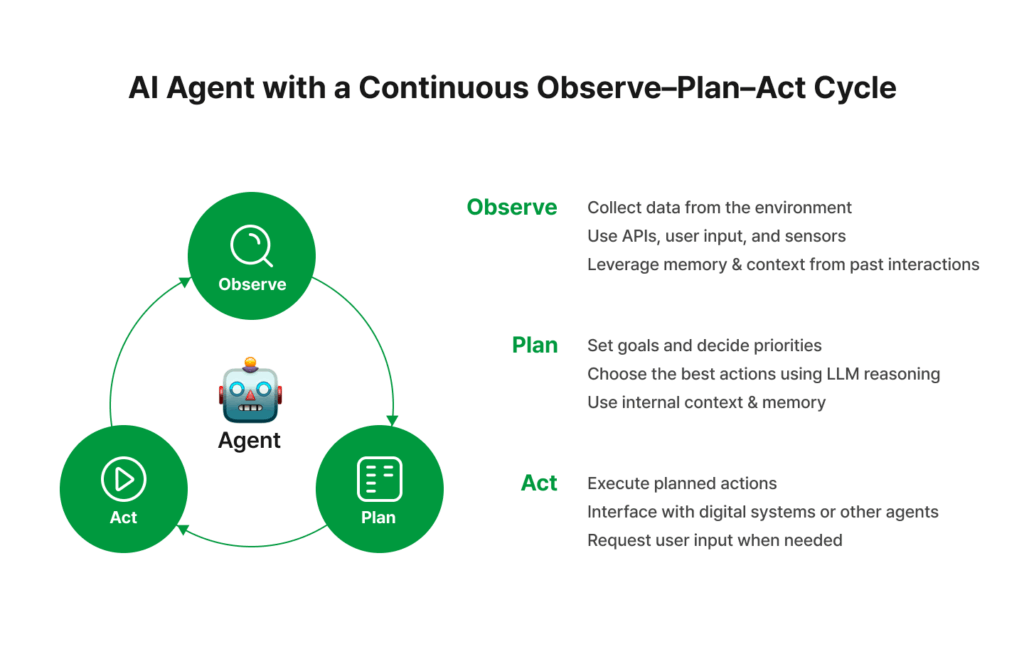
This autonomy is rapidly expanding beyond simple tasks into complex professional environments. AI Agents emerging in 2025 can organically connect multiple applications and systems via the MCP (Model Context Protocol). Furthermore, combined with RPA*, they are evolving into integrated business platforms that automatically control existing systems like ERP. With the advent of Agent-to-Agent (A2A) collaboration, the agent ecosystem is moving beyond a ‘single automation tool’ to become an intelligent AI network where agents work together.
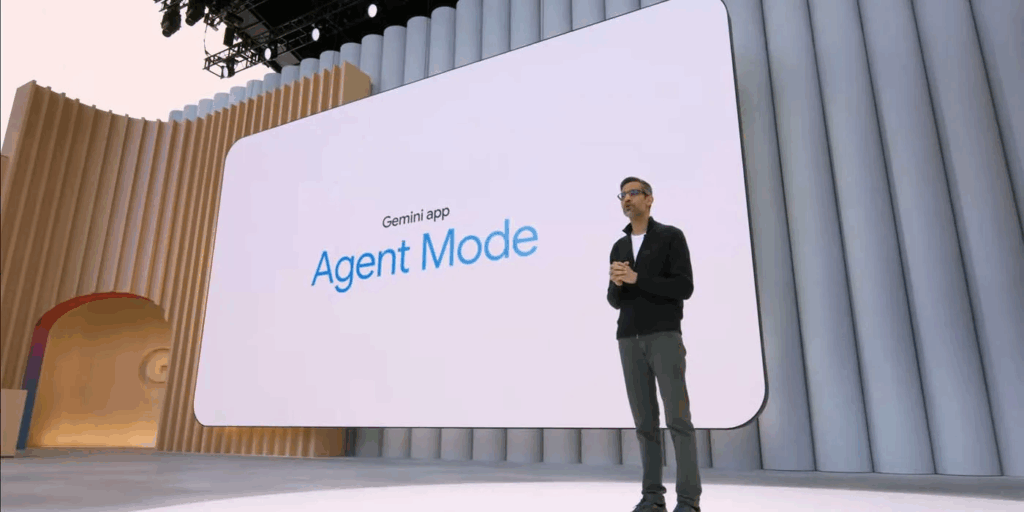
The fierce competition among global tech giants is accelerating. OpenAI introduced the ‘Operator,’ which directly controls web browsers, while Anthropic showcased ‘Computer Use,’ which performs general computer operations. Google unveiled three AI Agents (Jules, Astra, Mariner), targeting various domains from web search to coding automation. Amazon is integrating the AI Agent ‘Nova Act’ into its e-commerce and logistics systems. Domestically, SK Telecom announced its lead in the Korean AI Agent market with the smartphone-based personal AI Agent, ‘Aster.’
The rapid growth in market size proves this trend. According to MarketsandMarkets, the global AI Agent market is projected to grow from $7.6 billion this year to $47.1 billion by 2030, representing a Compound Annual Growth Rate (CAGR) of 45.8%.
This growth trajectory is expected to lead to the widespread adoption of practical AI Agents specialized for specific tasks. In the long term, AI is expected to advance to the ‘Self-Evolving’ stage, moving beyond learning from feedback to evaluating and improving its own execution processes and results.
2. The Rise of Vertical AI: Industry-Specific Solutions
If autonomous agents represented an innovation in ‘how AI works,’ Vertical AI shows a shift in ‘where AI works.’ While general-purpose AIs like ChatGPT and Claude expanded the utility of AI over the past few years, in 2025, ‘Vertical AI,’ specialized for specific industries and tasks, took center stage.
‘Vertical AI’ refers to ‘customized, industry-specific AI’ that precisely reflects the unique characteristics of each industry and the requirements of enterprises. It is gaining traction across various sectors because it resolves the chronic limitations of general-purpose AI—low specialization, limited profitability, and difficulty in customization—allowing companies to generate tangible business outcomes.
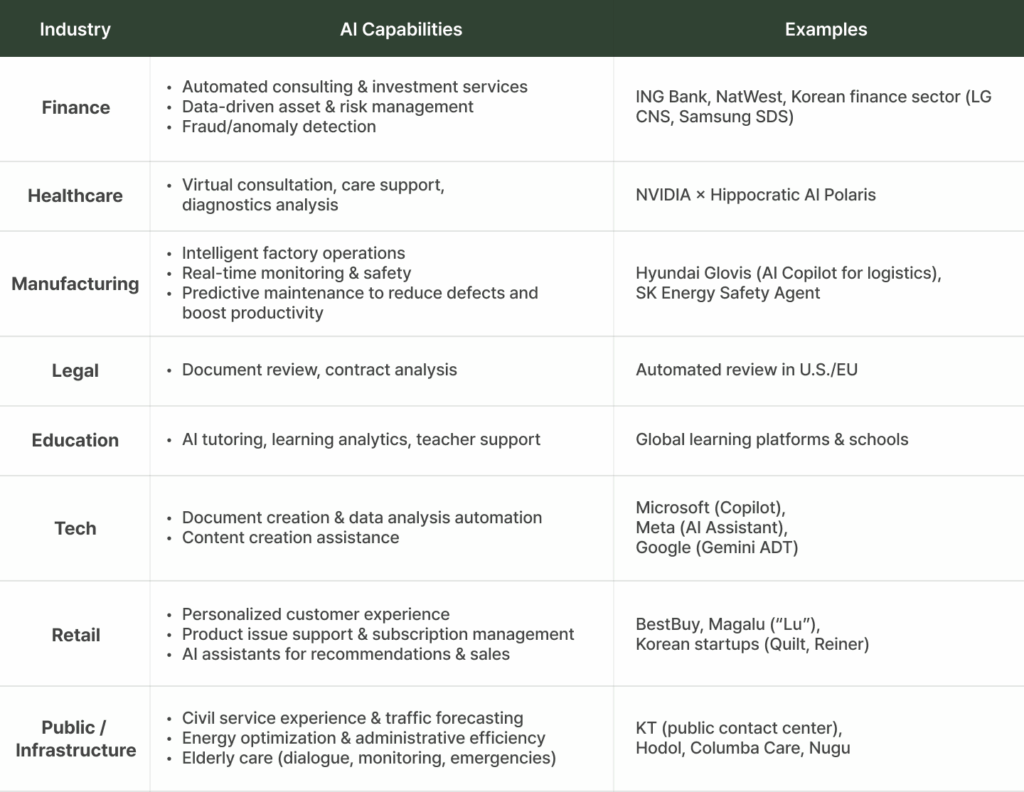
Specifically, companies are pursuing a hybrid approach, combining Vertical AI with general-purpose AI to gain a deeper understanding of industrial problems and simultaneously enhance both accuracy and service competitiveness. In this process, autonomous agent technology is being utilized as the execution engine for Vertical AI.
The market is also focusing on the potential of Vertical AI. Notably, Palantir, a military AI company, saw its stock price surge by a remarkable 147% in 2025, marking the highest increase in the S&P 500. Industry-specific solutions—such as medical AI for highly accurate inspections, manufacturing AI for process data analysis, and X2B AI optimized for e-commerce—are becoming the market mainstream.
Many experts anticipate this trend will continue for the foreseeable future, with a clearer division of labor: general-purpose AI providing the technological foundation and Vertical AI generating the final business value.
3. AI Moving to Personal Devices: On-device AI
On-device AI refers to AI that operates directly within personal user devices such as smartphones, PCs, and wearables, without relying on cloud servers. Since it can be used without an internet connection and personal data is processed locally without external transmission, it offers a strong advantage in privacy protection.
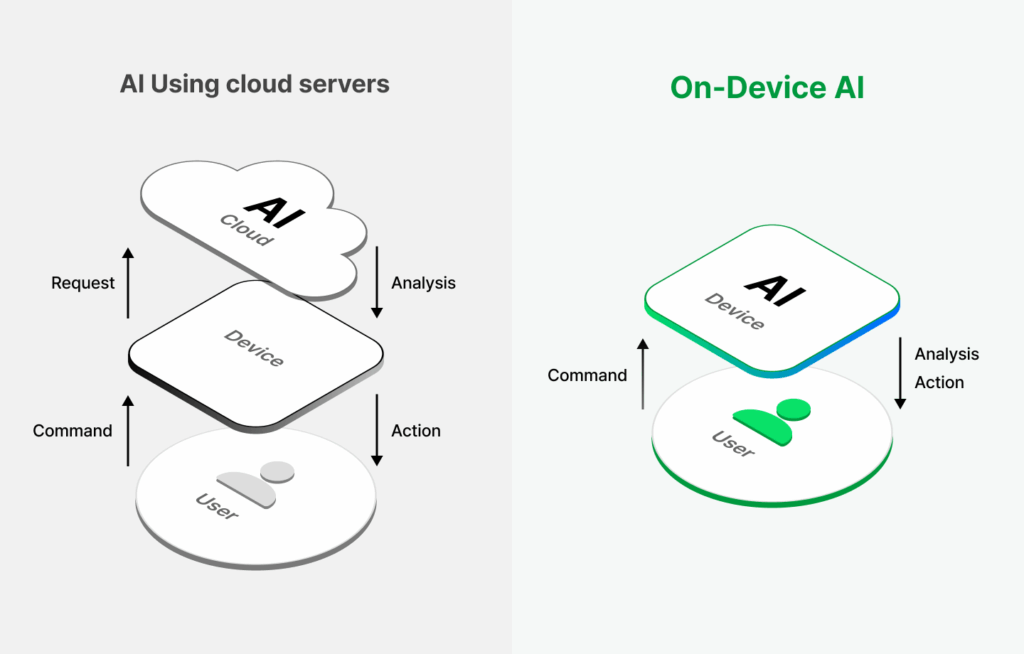
In 2025, On-device AI firmly established itself as a core technology for premium devices. Samsung’s Galaxy AI and Apple’s Apple Intelligence process key functions—from real-time translation and image analysis to text summarization—directly within the device, rather than in the cloud. Microsoft also launched the Copilot+PC, equipped with a high-performance NPU (Neural Processing Unit), creating a new market for ‘AI PCs.’
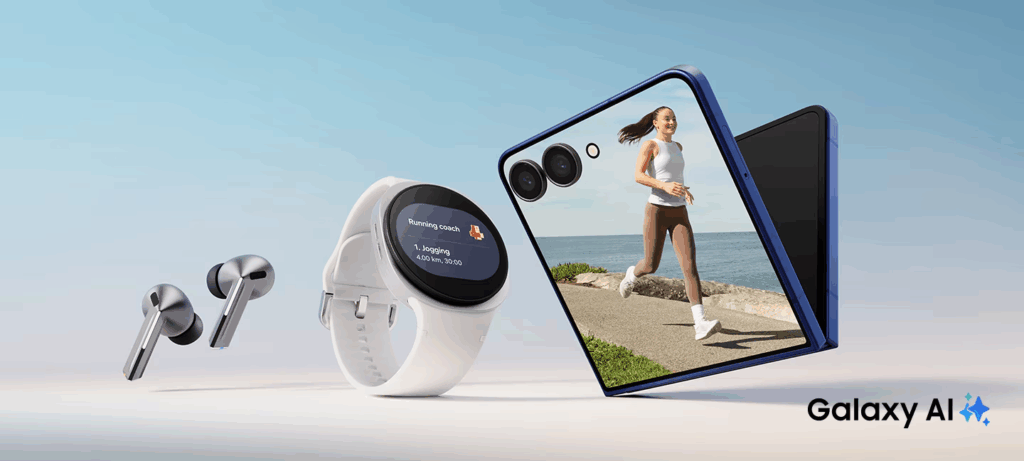
The reason On-device AI has become a mainstream technology is clear. Since the AI handles all computations within the device without relying on servers, it can provide immediate, zero-latency responses in autonomous driving, AR/VR object recognition, and real-time interpretation. Furthermore, as sensitive data never leaves the device, it offers robust privacy protection and significant cloud cost savings.
The development of SLM (Small Language Model) technology and AI Agents provides robust technical support for this growth. Thanks to this, high performance can now be realized with lightweight models even with limited device resources, making personalized services in the on-device environment a reality.
On-device AI is no longer a ‘special technology.’ It is becoming the new standard embedded in every smart device.
4. The Full-Scale Opening of the Humanoid Robot Era: The Advancement of Physical AI
Physical AI refers to technology where artificial intelligence is combined with physical devices, such as robots and autonomous vehicles, to directly interact with humans. Following NVIDIA CEO Jensen Huang’s declaration at CES 2025 that “The ultimate goal of AI is the humanoid robot,” massive private investment and government support have poured in, making it a rapidly emerging industrial pillar. Recent announcements by global companies, primarily Google and NVIDIA, go beyond simple product launches, demonstrating that the foundation for the large-scale commercialization of intelligent robots and autonomous systems has been laid. Physical AI is now moving beyond the research lab and standing at the center of a massive transformation that will reshape entire industries.
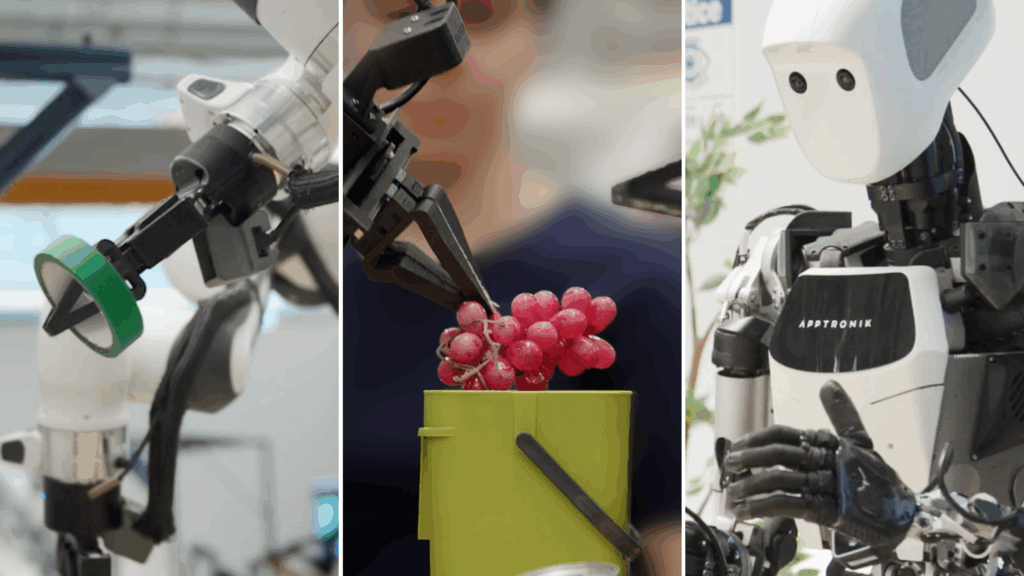
The market growth is steep. As of 2025, the global AI Robotics (including Physical AI) market size is estimated at approximately $22.5 billion, a growth of about 350% compared to 2020. It is projected to reach approximately $64.3 billion by 2030, with a CAGR of about 23.3%. A Goldman Sachs report also predicts that the worldwide humanoid market will reach $38 billion by 2035.
Physical AI is not just about putting AI onto a robot. It involves the organic combination of four core technologies—the brain (various AI models), sensation (sensors/computer vision), connection (edge computing/network), and action (control/actuators)—enabling robots to perceive, judge, and act like humans. Thanks to this convergence, the effectiveness of ‘Physical AI’ is being rapidly proven in real industrial settings, including factories, logistics, agriculture, and healthcare. In environments requiring precise control, it is already generating substantial results.
- Manufacturing and Logistics: Smart factories, logistics warehouse automation, predictive maintenance.
This is the most actively adopted sector. AI instantly detects minor equipment anomalies, and logistics robots perform 24-hour autonomous transport, maximizing productivity and operational efficiency. Domestic and international giants like Hyundai Motor Group (HMGICS) and POSCO DX are leading the way.
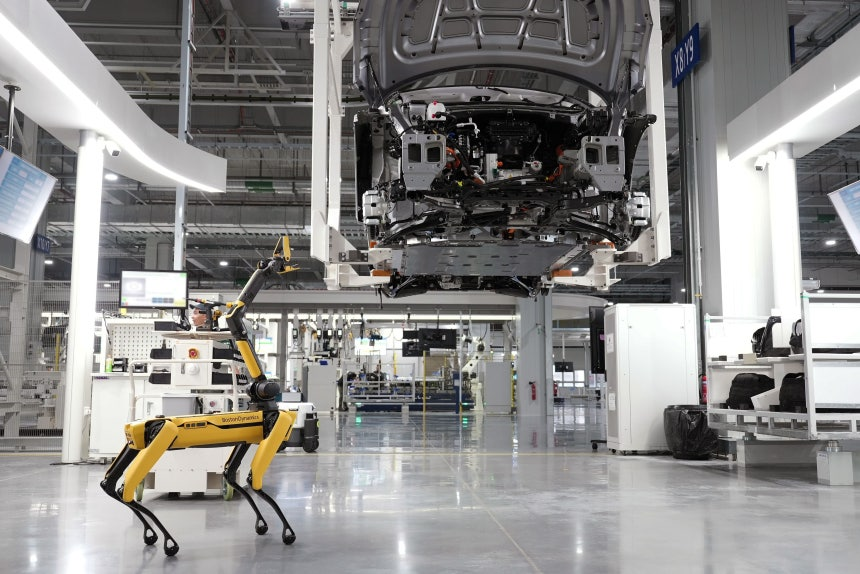
- Humanoid Robots: Tesla Optimus, Mercedes-Benz/Geely production line testing.
Tesla’s Optimus and Mercedes-Benz’s robots are being tested on actual production lines, and 1X’s NEO Gamma is starting household testing by the end of 2025, expanding real-world validation.

- Healthcare and Agriculture: Surgical robots, autonomous robots for precision agriculture.
Used for precise tasks beyond human capability, such as surgical robots (Da Vinci) in the medical field. In agriculture, AI vision-based drones perform detailed crop management.
The ultimate goal of Physical AI is to create autonomous robots that perceive, reason, and act like humans. While the current price of humanoid robots—ranging from $50,000 to $400,000 per unit—limits mass adoption, technological advances are rapidly lowering this barrier.
- Virtual-First Approach based on NVIDIA Isaac Sim:
Simulations are performed in a digital twin environment before physical prototypes are created, significantly reducing development time and cost. - Enhanced Action Reasoning Capability based on Generic LLMs:
Agentic AI technology, which autonomously executes complex commands in an on-device environment, is being utilized as the robot’s ‘brain.’ Specifically, Google’s Gemini for Robotics integrating Large Language Models (LLMs) with robot control is significantly improving the Generalization of Physical AI.
2025 is the year Physical AI began to take root in real factories and industrial sites, moving beyond the confines of the laboratory. Although high costs remain an issue, government policy support, capital influx from big tech companies, and advancements in inference technology based on NVIDIA Isaac Sim and LLMs are rapidly accelerating commercialization. In the next few years, humanoid robots are expected to become commonplace in industrial settings. The future we only heard about is now truly becoming a reality.
Conclusion
As we have examined, 2025 was a year when the AI market shifted away from the competition of massive models toward the full-scale implementation of field-centric, practical solutions.
Autonomous Agents that plan and act independently,
Vertical AI that precisely solves problems in industrial settings,
On-device AI that operates instantly within personal devices,
And Physical AI that interacts directly with the physical world.
AI is now transcending algorithms in servers to become a practical technology that solves on-site problems. It has entered a phase that directly transforms reality, organizations, and people. The competition ahead will be determined not by technical capability alone, but by the depth of application and the speed of execution.LaonPeople stands at the forefront of this change, implementing AI solutions that transform the field:
- Hi FENN: A platform for creating and deploying Autonomous AI Agents without coding, supporting the automation of repetitive tasks, integration with internal systems, and document analysis.
- Odin AI: A video surveillance solution realizing Vertical AI in safety and security sectors, offering high-dimensional video recognition that detects unstructured events in real-time without prior training.
- NAVI AI PRO: AI vision inspection and automated learning software specialized for various manufacturing industry domains, enabling ultra-high-speed inference within 1ms even on low-spec CPUs.
- EZ PLANET: Automates the development, operation, and retraining of AI models specialized for manufacturing processes, establishing a sustainable MLOps-based operating environment.
If you are curious about LaonPeople’s products and solutions, please leave a message in our Inquiry section. A LaonPeople AI expert will consult with you directly.